In Taiwan, tea is far more than a simple beverage to quench thirst—it is a spiritual rhythm, an artistic expression, and the ultimate gesture of hospitality. Deeply embedded in daily life, Taiwanese tea culture blends ancient Chinese traditions, unique island geography, and a contemporary commitment to craftsmanship.
1. The Island’s Unique High-Mountain Terroir
Taiwan produces some of the most sought-after teas in the world, largely due to its extraordinary topography. The island’s central mountain range creates distinct microclimates ideal for tea cultivation.
- High-Mountain Oolong (Gao Shan Cha): Grown at elevations above 1,000 meters in regions like Alishan, Lishan, and Shanlinxi. The cool temperatures, dense fog, and morning sunshine yield leaves rich in flavor compounds and low in bitterness, resulting in smooth, floral, and buttery notes.
- Oriental Beauty (Dong Fang Mei Ren): A heavily oxidized oolong harvested only after small green leafhopper insects bite the living tea leaves. This natural defense reaction imparts a unique, natural honey and ripe fruit aroma without any added flavorings.
2. Gongfu Tea: The Art of Mindful Brewing
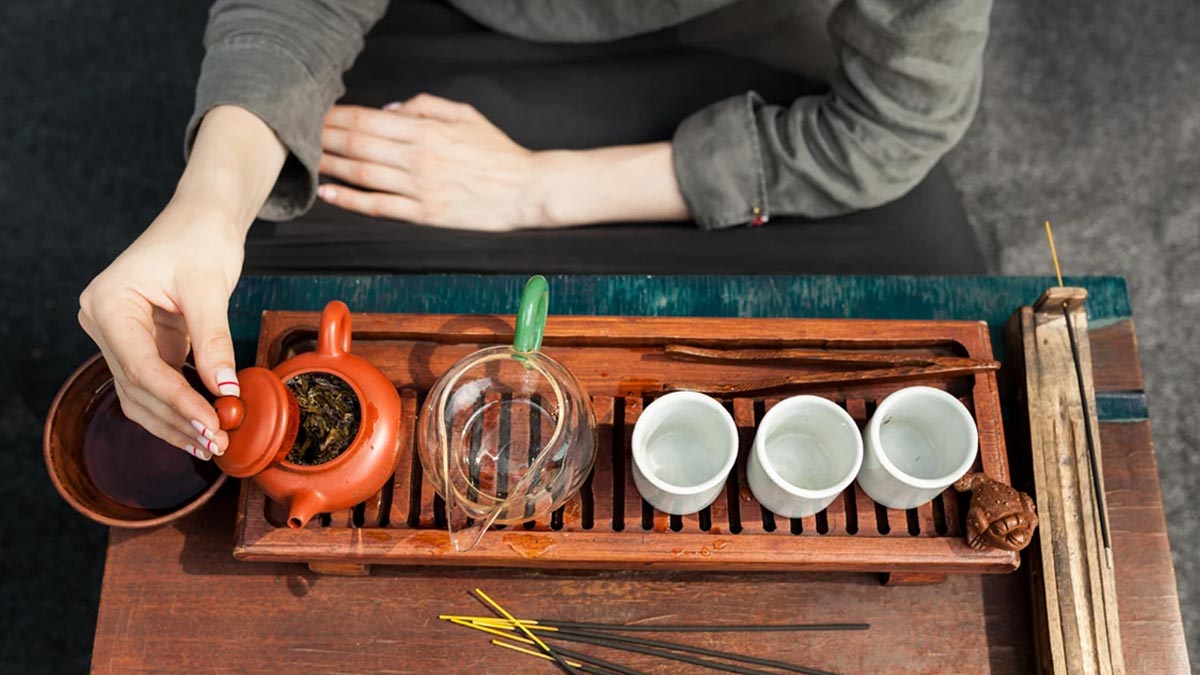
The heart of traditional Taiwanese tea appreciation lies in Gongfu Cha (literally “Making Tea with Skill”). Rather than casually steeping a teabag, Gongfu tea is a disciplined ritual that demands attention to detail.
- Small Clay Teapots: Typically crafted from Yixing clay or Taiwanese ceramic, which absorb tea oils over time to enhance successive brews.
- Aroma Cups (Wen Xiang Bei): A tall, narrow cup designed purely for inhaling the tea’s fragrance before pouring it into a tasting cup.
- Multiple Infusions: Premium Taiwanese oolongs are steeped briefly across 6 to 10 rounds, with each pour revealing evolving layers of flavor and aroma.
3. Social Harmony & Everyday Hospitality
Tea serves as the social glue of Taiwanese society across generations.
| Context | Role of Tea |
| Welcoming Guests | Offering a warm cup of tea is the universal first gesture upon entering a Taiwanese home or business. |
| Temple & Elder Culture | Older generations gather daily at neighborhood temples or park benches around portable tea sets to converse and build community. |
| Business Negotiations | Discussions take place around low wooden tea tables (Cha Zhu); pouring tea maintains a relaxed, harmonious dynamic. |
4. Modern Evolution: Bridging Tradition and Innovation
Taiwanese tea culture remains vibrant because it adapts to modern life without losing its roots. In the 1980s, the invention of Bubble Milk Tea (Boba) transformed traditional tea into a global pop-culture phenomenon. Today, modern teahouses seamlessly bridge the gap—offering cold-brewed high-mountain teas, cheese-foam toppings, and minimalist tea-tasting spaces that appeal to younger generations.
Tea in Taiwan remains a way to slow down, connect with others, and honor the natural rhythm of the island.
Leave a Reply